Imaginary friends: why children have them, and how to join in
Is it normal for a child to have an imaginary friend? What research says about how common they are and what they do for children, how to respond, and the rare signs worth a chat with a pediatrician.
One day, there’s an extra guest at dinner. You can’t see them, but your child can. They have a name (often a very strange one), firm opinions about vegetables, and a habit of being blamed for spilled juice.
Meet the imaginary friend. If your child has one, you’re in very good company, and there’s nothing to worry about. Here’s what researchers have learned about imaginary friends, what they do for children, and how to make the most of having an invisible extra member of the family.
How common are imaginary friends?
Very. Psychologist Marjorie Taylor and her colleagues at the University of Oregon have studied imaginary companions for decades. In one well-known study, they found that 65% of children had had an imaginary companion at some point by age seven, counting both invisible friends and toys or stuffed animals that a child treats as a person with a personality of their own. Counting invisible friends alone, it was 37%.
In other words, having an imaginary friend isn’t unusual at all. And most children know perfectly well that their friend is pretend, even while they insist on a place at the table for them.
What imaginary friends are like
They come in every shape:
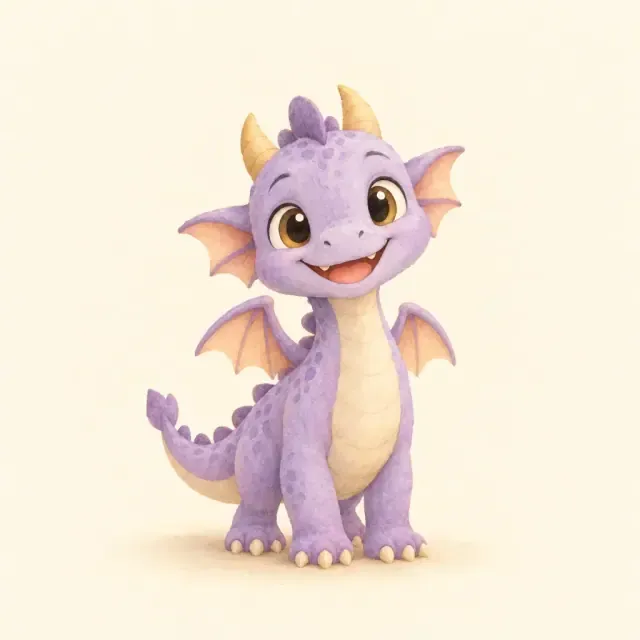
- Invisible friends, often other children, sometimes animals, sometimes something more exotic: a tiny dragon who lives in a pocket, a lion who only eats spaghetti.
- Personified toys: a stuffed rabbit with a voice, a history and strong views on bedtime.
- Friends with jobs: a helper, a protector, a baby who needs looking after, a naughty friend who does everything your child isn’t allowed to.
Some children have one. Some have a whole crowd. Some friends stay for years; some move away after a week (“He went to live in Australia”).
Imaginary friends aren’t always perfectly behaved, either. Plenty of parents hear about friends who are bossy, who won’t come when called, or who start arguments. That can be part of the point: the child is trying out what real relationships are like.
What imaginary friends do for children
Researchers who study imaginary companions see them as a normal, often healthy part of pretend play. Having one has been linked (in studies that show associations, not causes) with more advanced social understanding and with being less shy. They seem to give children:
- Practice with people. Talking to someone, taking turns, negotiating, imagining how someone else feels: an imaginary friend is a low-stakes rehearsal for all of it.
- A place to put big feelings. “Bobo is scared of the thunder” is sometimes the easiest way to say “I’m scared of the thunder.”
- Company. For a child who’s alone a lot, or going through a change, an imaginary friend can be real comfort.
- A storyteller’s training. Inventing a character, their voice, their history and their adventures is exactly what authors do. One study found that children with imaginary companions told richer stories, both about a picture book and about things that had happened to them.
- Somewhere to put the blame. “Mr. Wiggles spilled the milk.” It’s not lying, exactly. It’s a child finding their way toward taking responsibility, with a little help.
How to respond when your child has an imaginary friend
Be curious. Ask about them. What’s their name? Where do they live? What do they like to eat? What did they do today? Children usually love to tell you, and you’ll learn a lot about what’s on your child’s mind.
Play along, lightly. Saying hello, setting an extra place at a picnic, buckling them into the car now and then: small gestures show your child you respect their world. You don’t have to commit to feeding Bobo every meal for a year.
But don’t let the friend run the house. Imaginary friends don’t get to skip bedtime, refuse vegetables or break rules. “Bobo can stay up late in Bobo’s house. In our house, it’s bedtime.” If the friend gets the blame for something, invite them to help fix it: “Then you and Bobo can clean it up together.”
Don’t use them against your child. Teasing, or telling them in front of other people that their friend isn’t real, can make a child feel embarrassed about something that’s precious to them.
Let them go when they go. Most imaginary friends fade away on their own, often without a goodbye. Older children sometimes keep them privately for a long time. Both are normal.
Is it ever a cause for concern?
Rarely. Imaginary friends are a sign of a busy imagination, not of loneliness or a problem. A few things are worth mentioning to your pediatrician or a school counselor:
- the friend frightens your child, or your child seems distressed by them;
- your child says the friend tells them to do dangerous or hurtful things;
- your child seems to be withdrawing from all real relationships and activities, not just enjoying a friend alongside them;
- or the imaginary friend appears around a big upheaval or loss, and your child seems to be struggling in other ways too.
In almost every case, though, an imaginary friend is just what it looks like: a child’s imagination, working beautifully.
Invite them into the story
Imaginary friends make wonderful story characters, and bedtime stories are a lovely way to welcome them. Ask your child what their friend did today, and tell it back as a story. Or let the friend be the hero for a night: “Once upon a time, a tiny dragon named Bobo lived in a little girl’s pocket…”
We make Branchlings, and imaginary friends have their own place in it: when your child builds their cast, “Imaginary friend” is one of the choices, and they can design their friend (a dragon, a unicorn, a robot, a friendly monster) and bring them along on every adventure. The friend becomes part of the story, painted on every page, and your child decides what they all do at every fork.
For more ways to tell stories together, see our 50 bedtime story ideas, and for picking an app that leaves the imagining to your child, our guide to the best story apps for imaginative kids.
Imaginary friends: quick answers
Is it normal for my child to have an imaginary friend? Yes. In one study, 65% of children had had one by age seven (37% counting only invisible friends, not toys with personalities).
At what age do imaginary friends appear? Often in the preschool years, but school-age children have them too, and some keep them quietly for years.
Does an imaginary friend mean my child is lonely? Not usually. Researchers have linked imaginary companions with being less shy and more outgoing, and many children with them have plenty of real friends as well.
Should I pretend I can see the imaginary friend? You don’t need to pretend you can see them, but showing interest and playing along a little is a kind way to respect your child’s world.
Sources: Taylor, Carlson et al., imaginary companions in school-age children (2004); Taylor & Mottweiler, Imaginary Companions: Pretending They Are Real but Knowing They Are Not (American Journal of Play, 2008); Trionfi & Reese, imaginary companions and narrative skill (2009); Penn State Thrive, My child has an imaginary friend (2017).